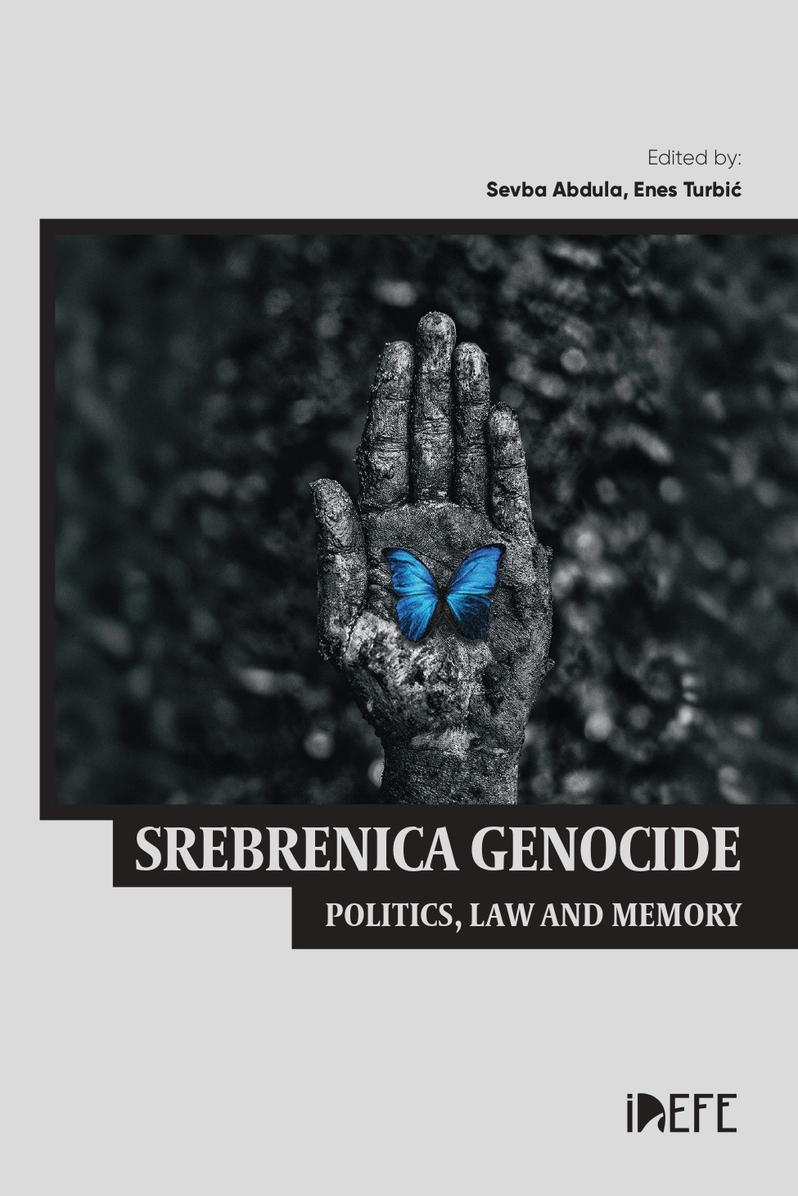
Eds. Sevba Abdula, Enes Turbić
IDEFE Publications, 2025
208 pp.
ISBN: 978-608-4944-32-4
/
The dissolution of the Ottoman and Habsburg empires, coupled with the construction of the Jacobin modern nation-state, produced state-society perspectives in the Balkans that were contradictory, competing, exclusive, and ‘othering’ at multiple levels. The collapse of the institutions that these empires had balanced for centuries necessitated the emergence and transmission of new political, economic, and social relations, making the rapid construction of both the nation and the state a necessity in the Balkans. However, a profound tension emerged between the borders defined by geography and history and the boundaries of new modern centralized states. The dispersion and heterogeneity of the population, along with ‘sanctified’ historical sites, overlapped to a certain extent during the nationalization process of the region’s peoples. The Balkan Wars, the World Wars, the breakup of Yugoslavia, and the current deadlock in the EU integration process can be viewed as consequences of this 150-year-long intersection.
The phenomenon of a “homogeneous population”, structurally demanded by the modern nation-state for the production of consent, has largely shaped the political actions of almost all states in the Balkans. Behind the attempts at deportation, assimilation, and genocide lay, to a large extent, the expectation of a firm and stable nation-state structure that would accompany such homogeneity.
In this context, national identity construction processes were carried out in a way that encompassed and instrumentalized all fields, including religion, education, history, culture, art, and science. Memory, collective identity, and the past were reconstructed through religious, historical, and educational processes to ‘construct’ the nation. Serbian, Greek, Bulgarian, Croatian, Albanian, and Bosniak national identities were brought into existence by being ‘reinvented’ by the state and intellectuals within this framework. These national identities, constructed in the modern sense, established links particularly with pre-Ottoman kingdoms, placed religion and ethnicity at the center, and largely ‘othered’ Ottoman, Turkish, and Muslim identities and history. This process of ‘othering’ was associated with numerous categories and ‘historical events’, such as the collapse of sacred kingdoms, backwardness, the fragmentation of identity, dispossession of homeland and territory, subjugation, and centuries of systemic oppression, and was transmitted to subsequent generations. Post-1918 historiography, supported by various identity construction mechanisms, constantly reproduced the significant events of Serbian collective memory, engraving the ‘us and the other’ dichotomy into the minds of successive generations.
In addition to these processes in the Balkans, another decisive and formative ongoing process involved a major competition among modern political ideologies such as constitutional monarchy, socialism, ethnic nationalism, and liberalism. It is necessary to consider the periods during which these ideologies defined modern power and national identity. It is observed that the capacity of regimes, particularly those based on ethnic nationalism, to mobilize the masses through national memory and ‘us-versus-them’ mechanisms has significantly threatened stability in the Balkans.